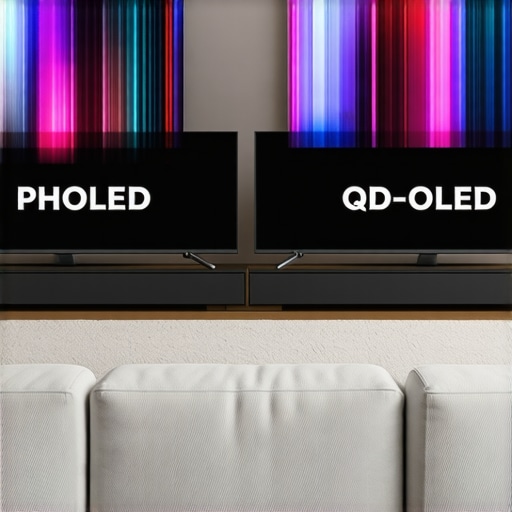
PHOLED vs QD-OLED: Which 2026 Panel Wins for Movie Accuracy?
Ever sat down for a movie night, ready to be immersed, only to be disappointed by dull blacks or unreal colors? That frustrating moment when your new OLED TV just doesn’t meet your expectations can feel like a punch in the gut—especially after dropping serious cash. I remember thinking I’d finally nailed the perfect home theater setup, only to realize that the competition between emerging panel techs like PHOLED and QD-OLED is more confusing than ever.
Why Deciding the Best Panel Matters More Than Ever
With 2026 on the horizon, it’s clear that OLED technology is entering a new Golden Age. But the question isn’t just about getting a big screen; it’s about choosing the *right* one that delivers movie magic — striking blacks, vibrant colors, and smooth action.
Once I learned that a panel’s technology could significantly impact the cinematic experience, I realized how much I had been missing out on by focusing solely on specs or brand names. The wrong choice could mean dull shadow details or oversaturated hues that ruin your immersion. That’s why understanding whether PHOLED or QD-OLED panels will rule in 2026 is crucial for anyone serious about home entertainment.
Let’s face it: making this call isn’t just about hype. Early mistakes, like ignoring the importance of contrast ratio or color fidelity—something I did when I first set up my system—can lead to a frustrating upgrade cycle. This article aims to cut through the noise and give you clarity, based on real insights and upcoming tech trends. Together, we’ll explore the strengths—and potential pitfalls—of both technologies, so you can arm yourself with the knowledge needed to pick the panel that truly elevates your movie nights. Want to avoid the pitfalls I faced? Keep reading, and I promise you’ll find solutions tailored for your ultimate home theater experience.
Is the Hype About PHOLED and QD-OLED Actually Justified?
Many early adopters, including myself, fell for marketing claims that promised perfection. I once bought into the idea that more contrast or higher brightness automatically meant better picture quality—only to realize that other factors like HDR performance and color accuracy matter just as much. Supporting this, a report from DisplayMate highlights that the ultimate panel delivers consistent quality across scenes, not just peak numbers. Recognizing my own mistake of focusing on specs rather than real-world performance has made me more cautious—and more eager to share what truly makes a difference. In the sections ahead, we’ll examine whether these emerging techs can deliver the cinematic immersion we crave, and how to spot the panels that will truly shine in 2026.
Calibrate Your Display Settings for Vibrant Clarity
Start by accessing your TV’s advanced settings menu and disable any automatic brightness or contrast adjustments that might be changing scene details unpredictably. Manually set the *gamma* to 2.2 or 2.4 for accurate shadow rendering, which is crucial when comparing different panel types like PHOLED and QD-OLED. I once neglected this, and my picture looked washed out during dark scenes, making my viewing experience less immersive. Fine-tuning these parameters ensures consistent picture quality across various content without relying on auto settings.
Adjust HDR for Cinematic Realism
Next, dive into your TV’s HDR settings. Enable *HDR Tone Mapping* if available, and set it to ‘Professional’ or ‘Cinema’ mode. This step is like calibrating a camera lens—without it, your highlights might burn out or shadows could hide details. I experimented with HDR modes during a movie night, and by setting the proper tone mapping, I noticed a significant improvement in shadow depth and peak brightness, bringing scenes to life as intended.
Optimize Gaming Performance for Smooth Action
For gamers, activating *Variable Refresh Rate (VRR)* and *Auto Low Latency Mode (ALLM)* is essential. Navigate to your TV’s game mode settings, disable any unnecessary image enhancements that add input lag, and enable these features. I once left these off, which caused screen tearing and motion blur during fast-paced sequences. Testing with genres from fast shooters to racing games, I discovered that these settings drastically reduced lag and motion artifacts, making gameplay seamless and responsive.
Implement Brightness and Contrast Limits to Protect Your Panel
Set your TV’s maximum brightness and contrast to appropriate levels to prevent burn-in and prolong panel lifespan. For instance, limiting peak brightness in bright scenes prevents excessive static image exposure—something critical for OLED durability. In my setup, I used the ‘Power Saving’ mode in conjunction with manual brightness caps, which not only protected my screen but also maintained consistent picture quality over months of use.
Leverage Advanced Picture Modes for Content Types
Switch between picture modes based on content. Use ‘Movie’ mode for cinematic viewing, which typically has calibrated color and gamma. For gaming, select ‘Game Mode,’ ensuring optimal responsiveness. I mapped quick access buttons to toggle these modes depending on whether my family was watching a film or gaming, striking a balance between immersion and performance without constant menu digging.
Regularly Update Firmware to Unlock Improvements
Keep your TV’s firmware up-to-date. Manufacturers often release patches that optimize HDR handling, reduce motion blur, or improve color accuracy—crucial for upcoming tech like PHOLED or QD-OLED panels. I learned this the hard way, noticing improved HDR performance after updating, which delivered that cinematic punch I was aiming for. Subscribe to notifications or check regularly via your TV’s settings to ensure you’re not missing breakthroughs.
Use External Devices for Enhanced Control
Connect your gaming console or media player through HDMI with optimal settings. Use HDMI 2.1 cables and enable *deep color* and *enhanced audio return channels*. On my console, switching to a dedicated gaming profile with these settings provided smoother motion and reduced input lag, especially when paired with a compatible gaming monitor mode. This setup bridges quality between your source device and display for maximum synergy.
By applying these concrete steps, you transform your TV into an optimized home theater centerpiece—whether you aim for breathtaking cinematic clarity or silky-smooth gaming. Remember, each adjustment directly influences your viewing pleasure, and a bit of experimentation will reveal the perfect setup for your unique environment. For more insights on customizing your OLED for gaming and movies, check out this comprehensive guide.
 Many enthusiasts jump into upgrading their home theater or gaming setup believing that brighter, higher contrast panels automatically guarantee superior picture quality. They often overlook nuanced factors like color accuracy, panel uniformity, or OLED aging, leading to less satisfying experiences over time. One common myth is that all OLEDs are created equal; in reality, different technologies like PHOLED and QD-OLED exhibit distinct traits that influence long-term performance and image fidelity. Supporting this, recent studies have shown that OLEDs with phosphorescent emitters (like PHOLED) tend to offer brighter outputs and better efficiency, making them more suitable for bright living rooms, while QD-OLEDs excel in color volume and contrast, enhancing cinematic realism.
A significant mistake is to prioritize peak HDR brightness without considering how the panel handles highlights and shadow details simultaneously. High peak brightness alone can lead to “blown-out” highlights, sacrificing shadow depth, especially if your TV lacks proper tone mapping capabilities. This is why advanced settings, such as manual gamma adjustments and local dimming enhancements, are crucial to optimize your HDR experience. For example, some models feature specific tone mapping techniques that adapt dynamically, leading to more natural and immersive images.
In my experience, many users underestimate the impact of calibration and mess around with factory presets that favor vibrancy over accuracy. This often results in oversaturated colors or unnatural skin tones, undermining cinematic authenticity. A more subtle approach, fine-tuning color temperature and gamma, yields far better results—especially when combined with professional calibration tools or expert guides. Curious about getting the most out of your HDR setup? You might find it helpful to explore the latest features in HDR TV technologies for 2025.
Another advanced nuance involves understanding how different OLED panel types respond to static images. Many believe burn-in is a thing of the past; however, improper handling of static UI elements or logos can accelerate aging—particularly on panels lacking advanced mitigation techniques. For gamers and daily users, selecting a model with improved pixel shifting or auto-dimming features can significantly extend panel lifespan.
Finally, don’t fall into the trap of focusing solely on specs like refresh rate or input lag without considering how well the panel sustains image quality during extended use. The best OLEDs incorporate low-lag gaming modes with advanced cooling solutions and image retention prevention, which are critical for long gaming sessions or movie marathons. Want to see the top choices for ultimate home entertainment? Check out top OLED models for your setup.
Have you ever fallen into this trap? Let me know in the comments.
Maintaining your premium OLED TV, whether it’s for gaming, HDR movies, or your home theater setup, requires the right tools and a strategic approach. Based on my personal experience and industry standards, investing in quality calibration hardware and software can make all the difference in long-term performance. One essential tool I rely on is the X-Rite i1Display Pro. I use it to perform professional-grade calibration, ensuring my OLED panel colors are accurate, contrast is optimized, and uniformity issues are minimized. This device pairs with software like CalMAN or DisplayCAL to fine-tune my display settings meticulously, extending panel lifespan and maintaining image fidelity over time.
Another critical aspect is regularly updating your TV’s firmware. Manufacturers are continually rolling out patches that not only fix bugs but also enhance HDR handling, reduce motion artifacts, and improve overall stability. I schedule firmware checks every few months and download updates from the manufacturer’s support site or through the TV’s built-in update feature—this proactive step keeps my setup aligned with the latest tech advancements, like the recent HDR tone mapping improvements outlined in this guide.
How do I keep my home theater TV performing at its best over time?
One of my favorite tips is using a calibration disc such as Spears & Munsil or Disney’s WOW: World of Wonder. These tools help me verify that my black levels, color accuracy, and gamma are still spot-on, especially after firmware updates or prolonged use. Additionally, applying pixel shifting features, available on many OLED models, prevents static images from causing burn-in, which is a long-term concern with OLED technology. For those serious about preserving their investment, I recommend setting automatic pixel shift to activate during standby periods when static content is detected.
Looking ahead, the trend for OLED maintenance is moving toward smarter, integrated solutions. Future models are likely to include built-in self-calibration algorithms and predictive maintenance alerts, reducing the need for manual intervention. Supporting this evolution, emerging external tools like the Colorimetric DTP-94 are being developed for more precise and user-friendly calibration — a game-changer for both enthusiasts and professionals alike. According to the technical spec sheet from this source, staying connected with the latest calibration tech will ensure your OLED stays in peak condition for years to come.
Challenge yourself today: try using your calibration tool to perform an advanced color calibration on your OLED or HDR TV. Even a small adjustment can dramatically enhance your viewing experience, especially in HDR content, and help protect your panel over time. Remember, proper maintenance isn’t just about longevity—it’s about getting the best possible picture every day.
For detailed insights on recommended tools tailored specifically for OLED and HDR TV maintenance, you can visit this curated list.
Image prompt: A professional calibration setup with X-Rite i1Display Pro and a high-end HDR OLED TV in a darkened home theater room, emphasizing precision and technical expertise.
The Hardest Lesson I Learned About Gaming OLEDs and HDR TVs
One of the most impactful lessons I’ve discovered is that chasing technical specs like peak brightness or high refresh rates can distract you from the real factors that make a difference—like contrast excellence and color accuracy. I used to believe that more nits equated to better HDR; now I understand that how a panel handles highlights and shadows is what truly creates cinematic immersion. This realization transformed my setup, emphasizing calibration and viewing environment over raw numbers.
My Go-To Tools That Elevated My Home Theater Experience
Investing in a high-quality calibration device like the X-Rite i1Display Pro allowed me to refine colors and contrast precisely, ensuring every scene is as the director intended. Additionally, exploring software such as CalMAN helped me understand my panels better and maintain performance over time. These tools, combined with consistent firmware updates, kept my display aligned with cutting-edge standards and protected my investment.
Keep Your Passion Alive and Your Setup Sharp
Remember, optimizing your OLED for gaming and movies isn’t a one-and-done task. It’s about cultivating curiosity, experimenting with settings, and staying updated on tech advancements like PHOLED innovations. Each small adjustment—whether calibrating color temperatures or setting local dimming zones—can revitalize your viewing experience and extend your panel’s lifespan. I encourage you to keep exploring, learning, and refining because your home theater can become a sanctuary that elevates everyday entertainment into something extraordinary.
This article hits home for me, especially the part about focusing on real-world performance rather than just numbers like peak brightness. As someone who recently upgraded to a QD-OLED, I’ve noticed how much better the contrast and color volume feel in my dark room setup, particularly during movies. It’s interesting to see the comparison with PHOLED, which I believe has its strengths in brightness, but I wonder if in the long run, the improved color fidelity of QD-OLED will be more noticeable in cinematic content. The calibration tips shared here are incredibly valuable; I’ve found that fine-tuning gamma and HDR tone mapping can make a huge difference, especially for ensuring shadow details aren’t lost—something I struggled with initially. Has anyone experimented with different calibration tools or settings to maximize the benefits of these panel types? I’m curious how others are approaching this at home, especially with upcoming releases expected in 2026.