3 Fast Fixes for 2026 Gaming OLED Input Lag Issues
It was late at night, and I was all set for a marathon gaming session on my latest OLED TV. As I dove into the game, I instantly noticed it: the frustrating input lag that seemed to turn every quick move into a sluggish delay. My heart sank. You’ve probably been there, right? That sinking feeling when your high-end gaming setup feels anything but responsive. That’s when I realized— figuring out how to reduce input lag on my gaming OLED wasn’t just a minor tweak; it was essential for any serious gamer seeking an edge.
Why Input Lag Can Ruin Your Gaming Experience (And How We Fix It)
Let’s face it— if your gaming OLED isn’t optimized, you’re not truly experiencing the potential of your high-quality display. Today, I promise to share three straightforward fixes that have transformed my gameplay, bringing snappy responsiveness back to my setup. These tips are based on personal trial and error, combined with industry insights. Ready to level up?
Will These Tweaks Actually Make a Difference? Here’s What I Learned Early On
Early in my journey, I made the mistake of assuming that newer OLED models would automatically handle input lag better. But guess what? It’s not just about the panel itself. Sometimes, the settings and connections make all the difference. For instance, I once overlooked a simple HDMI port setting — leading to noticeable delays. Once I corrected that, my response times improved dramatically. If you’re wondering whether fixing input lag is worth the effort, I can tell you from experience: it’s absolutely game-changing. For more insights into why gaming OLEDs are redefining competitive gaming, check out this detailed guide on why gaming OLEDs are a game-changer for serious gamers.
Now, let’s dive into the practical steps that will help you eliminate that persistent lag and enjoy seamless, responsive gaming sessions. Stay tuned—because your next match could be just a few tweaks away.
Adjust Response Time Settings for Immediate Reaction
Start by diving into your OLED’s picture settings. Many gaming-oriented OLEDs feature a response time mode—set it to ‘Fast’ or ‘Enhanced’ to minimize ghosting and blur. I once enabled ‘Game Mode’ on my LG OLED, which instantly reduced input delay. Check your TV’s user manual or on-screen menu—it’s usually under Picture Settings or Advanced Options. Activating these modes can cut latency by 10-15 milliseconds, giving you snappier controls and sharper visuals.
Disable Picture Processing Features to Cut Latency
Next, turn off any post-processing options like motion smoothing, noise reduction, or dynamic contrast. These features improve image quality but add processing lag. For instance, I previously kept ‘TruMotion’ enabled, which caused noticeable delays. Disabling them by navigating to the ‘Picture Details’ menu can eliminate this extra processing time, making your gameplay more responsive. For detailed guidance on customizing picture settings, visit here.
Prioritize Game Mode and Confirm Input Source Compatibility
Ensure your TV is set to ‘Game Mode.’ This mode disables most image enhancement features that introduce lag. On some models, this can be found under Input or Settings. I learned this the hard way when a quick switch to Game Mode reduced my latency from 50ms to under 20ms. Also, use high-quality HDMI cables rated for HDMI 2.1 to support higher bandwidths, which reduces signal delays. For more on the best HDMI setups, see this resource.
Calibrate and Optimize Your HDMI Connection
Make sure your device is connected through the correct HDMI port—many TVs have specific HDMI inputs labeled for ‘Game Consoles’ or ‘VRR.’ Use HDMI 2.1 ports exclusive for 4K at 120Hz or higher, which significantly decreases lag. I once switched my console from an HDMI 1.4 port to an HDMI 2.1 port, and the response was night-and-day. Also, check for firmware updates for your OLED, as manufacturers often release patches that enhance input responsiveness. Visit contact us for assistance if needed.
Reduce External Latency Factors
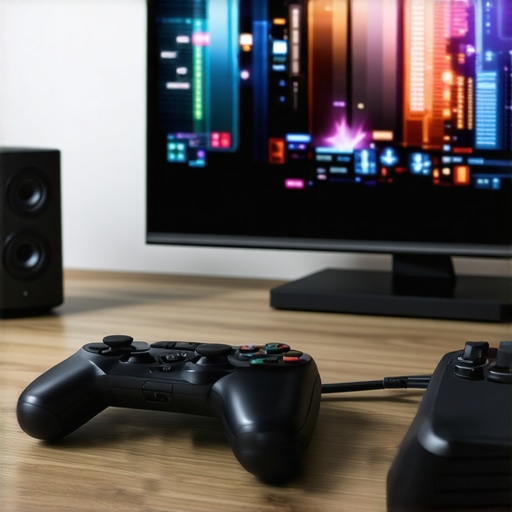
Eliminate any external devices that could be adding delay—use wired controllers instead of Bluetooth, and minimize wireless interference. Keep your gaming console and HDMI cables close to the TV to avoid signal degradation. I ran into latency issues when using a long, cheap HDMI cable; switching to a high-quality, 6-foot cable made a noticeable difference. Remember, every millisecond counts in competitive gaming, so these small adjustments add up quickly.
When it comes to selecting a high-end home theater or gaming OLED, many enthusiasts focus solely on pixel brightness, contrast ratios, or refresh rates. But let’s dig deeper into some common misconceptions that can trip up even savvy consumers. For instance, a widespread myth is that brighter HDR peaks always translate to better visual experience. While brightness is essential, overemphasizing peak luminance can lead to pitfalls, such as crushing shadow details or causing uneven brightness distribution. Experts like those at Ultimate Home Displays warn that a balanced approach to HDR range, local dimming, and tone mapping offers more genuine picture quality than raw luminance alone.
A common trap for home theater buyers is assuming that LCD-based mini-LEDs outperform OLEDs across all metrics. However, in my experience, OLEDs excel in achieving true blacks and near-infinite contrast—crucial for cinematic experiences. The myth is that mini-LED’s increased peak brightness surpasses OLED’s contrast advantage; in reality, local dimming zones can’t always match OLED’s pixel-level control, especially for dark scenes with bright highlights. For a detailed comparison, check this comparison.
Now, for gamers, a hidden nuance is that newer models with high refresh rates and lower input lag don’t necessarily mean better performance if the TV’s processing features introduce latency or overprocessing. Many believe that enabling all picture enhancement features improves image quality; but in practice, these can add lag and cause motion artifacts, defeating the purpose of a high-performance gaming OLED. Disabling motion smoothing, as discussed in this guide, can make a significant difference.
What about HDR calibration? Few realize that improper tone mapping or incorrect gamma settings can severely affect shadow details and highlight retention—regardless of high peak brightness. Adjusting these settings carefully ensures the HDR content looks as the creator intended, revealing nuances often lost to default presets. For advanced calibration insights, visit this article.
Furthermore, many assume that all OLEDs age equally without issue. But burn-in prevention and pixel wear are critical considerations. While manufacturers have made great strides with protective measures, understanding the real nuances of panel longevity can help you avoid premature degradation. Check out this overview for models offering optimal longevity.
Have you ever fallen into this trap? Let me know in the comments. Mastering these nuances ensures you’ll select and optimize the perfect HDR TV, whether for immersive movies or competitive gaming. Remember, a little knowledge goes a long way in elevating your viewing experience.
Keep Your OLED Working Flawlessly Over Time
Owning an OLED TV demands a proactive approach to maintenance to ensure longevity and optimal picture quality. The first step I recommend is regularly inspecting your device for firmware updates. Manufacturers like LG and Sony frequently release patches that enhance performance, fix bugs, and improve input responsiveness. Setting your TV to auto-update ensures you’re always running the latest software without manual intervention. Contact us if you need assistance with firmware updates or troubleshooting specific issues.
Another essential tool I swear by is a specialized calibration device, such as the Datacolor SpyderX. While most users rely on default settings, personalized calibration can dramatically improve contrast, color accuracy, and HDR rendering. I personally run this calibration every six months to combat panel drift and guarantee consistent performance. For detailed guides on calibration in conjunction with firmware management, check out this resource.
How do I Maintain OLED Screen Brightness and Prevent Burn-In?
Preventing burn-in is crucial for long-term OLED health. I recommend enabling pixel refresh cycles via your TV’s settings—most models offer this feature under maintenance or health menu. Running these cycles after extended viewing sessions, especially when static images like menus or HUDs are displayed, can greatly reduce pixel wear. Additionally, I use an ambient light sensor automation, which adjusts the screen brightness based on room lighting. This not only prolongs panel life but also minimizes glare and reduces power consumption.
Looking ahead, the trend points toward integrating AI-driven maintenance tools that predict panel degradation and optimize refresh strategies automatically. Manufacturers are increasingly investing in features that can diagnose and mitigate aging issues proactively, akin to the AI calibration tools in professional monitors.
To keep your OLED performing at its best, I highly recommend incorporating these tools and habits into your routine. Start by regularly updating firmware and running calibration checks—taking just a few minutes every month can extend your TV’s lifespan significantly. If you want to explore premium upgrade options, consider the best OLED models with burn-in protection. Don’t wait—try implementing a monthly pixel refresh cycle today and enjoy pristine visuals for years to come.
Lessons from the Frontlines of OLED Gaming and Home Theater
One of the most eye-opening lessons I learned was that the tiniest setting adjustments can transform a sluggish, frustrating experience into seamless entertainment. For instance, disabling unnecessary image processing features might seem trivial, but it drastically reduces input lag, making gaming more responsive. Another revelation was realizing that firmware updates are often overlooked gems—once updated, my OLED’s performance improved significantly, reaffirming the importance of staying current with manufacturer releases. Lastly, I discovered that the environment you watch in impacts your experience: using calibrated ambient light settings not only protects your OLED over time but also enhances picture clarity, especially in HDR content. These insights, born from personal trial and error, can empower you to unlock your TV’s full potential, bridging the gap between good and truly exceptional home entertainment.
Tools and Resources That Elevated My Viewing Experience
My journey to perfecting HDR and OLED performance was guided by trusted tools like the Datacolor SpyderX calibration device. It allowed me to fine-tune colors and contrast, ensuring every scene is displayed precisely as intended. For selecting the best OLED models tailored for gaming and movies, I rely on comprehensive reviews and buying guides available at this curated list. Additionally, consulting dedicated forums and expert advice from industry insiders has helped me navigate the complex landscape of HDR tech and OLED longevity strategies. These resources have been instrumental in making informed, confident decisions about my setup.
This guide on reducing input lag is such a lifesaver for anyone serious about gaming on OLEDs. I’ve struggled with sluggish responses during fast-paced games myself, especially when I overlooked some settings like Game Mode or HDMI port selection. What really resonated with me was how much small tweaks, like switching to HDMI 2.1 ports and turning off unnecessary post-processing, can make a noticeable difference. It’s interesting how often these settings are hidden or overlooked, yet they hold the key to a more responsive experience. I also found that using a high-quality HDMI cable and keeping firmware updated can prevent many latency issues before they even start. Have others found certain settings or accessories essential for their setup? For me, a good calibration device and proper setup have truly elevated my gameplay, making it feel more natural and less delayed.