Don’t Buy an OLED TV Yet: 3 Reasons to Wait for 2026 PHOLED Deals
It was late at night, and I was staring at the glowing screen of my then-new OLED TV. The picture was stunning, right? But suddenly, I noticed a faint ghost image lingering on the corner. Turns out, I had jumped the gun on buying an OLED without understanding the quirks of the technology. That realization hit me hard—and it made me question whether I should have waited for better options. If you’ve ever felt the rush to upgrade your home entertainment or gaming setup only to be disappointed later, you’re not alone.
Why Waiting for 2026 Could Save Your Wallet and Entertainment Experience
Purchasing the latest TV models can be tempting, especially with flashy features and eye-popping reviews. But with OLED technology evolving rapidly, rushing into a purchase now might mean you’ll miss out on significant improvements coming in 2026. I’ve learned this firsthand—from early missteps, I understand the importance of patience. Waiting could mean accessing PHOLED displays with better longevity, improved HDR performance, and killer gaming capabilities, all at a more reasonable price.
Is the Hype About 2026 OLEDs Just Marketing? Would Waiting Be Worth It?
Here’s where I made a big mistake early in my tech journey: I bought an OLED TV without researching upcoming advancements, thinking I was getting the best quality right now. Spoiler—the newer models in 2026 are expected to have revolutionary features like enhanced durability, faster response times, and lower black crush issues. Industry experts suggest that the ongoing development of PHOLED technology will address many current limitations, making the wait well worth it. According to recent insights from [UltimateHomeDisplay](https://oledtvs.ultimatehomedisplays.com/unveiling-the-future-of-home-theater-tvs-oled-technology-breakthroughs), 2026 models could deliver a dramatic leap in visual fidelity.
Do you find yourself rushing to upgrade, only to wish you’d held out? If so, you’re not alone—and there’s good reason to reconsider before making that final purchase. In the next sections, I’ll guide you through the compelling reasons to hold off and how to prepare for those exciting 2026 releases.
Set Your Priorities Before Investing
Start by listing your needs: Do you prioritize gaming, movies, or general TV use? This clarity will guide your research, ensuring you don’t buy features you don’t need. I once rushed into buying a high-end OLED without defining my priorities, ending up with features I never used. Clear priorities save money and frustration.
Research Upcoming OLED Technologies
Visit authoritative sources like UltimateHomeDisplay to understand what 2026 models will offer. Focus on improvements like enhanced durability from PHOLED tech, faster response times, and expanded gaming features.
Compare Future and Current Models
Create a spreadsheet comparing current OLED options with leaked or anticipated 2026 models. Pay attention to key specs like brightness levels, response times, and black levels. This method allows you to visualize how much value a future model will bring and decide whether to wait.
Set Up a Waiting and Savings Plan
Decide a realistic timeline—say, 18 to 24 months—and start saving accordingly. Use a dedicated fund to avoid impulsive purchases. When I set aside a small amount each month, it reduced the sting of waiting and prepared me financially for the upgrade when the time came.
Adjust Your Media Consumption Habits
If you’re eager for your next TV, tweak your streaming habits to make the wait easier. Streamless content temporarily and plan future viewing around upcoming release dates for 2026 models. This reduces the FOMO and keeps you engaged during the waiting period.
Stay Updated on Industry Developments
Follow trusted tech sites and join online communities. Tech forums often share leaked specs and release dates. For example, joining a dedicated contact page helps you get personalized updates from manufacturers and experts, ensuring you’re among the first to know when new models drop.
Prepare Your Room and Content
Optimizing your viewing space now makes transitioning to a new OLED seamless. Consider lighting conditions, wall color, and mounting options. Also, upgrade your media sources—like streaming boxes or gaming consoles—to ensure compatibility with future high-performance OLED features, such as 4K 240Hz gaming with passive cooling.
Understand Your Budget and Timing
Set a clear budget aligned with your priorities. Keep an eye on upcoming sales and trade-in offers around late 2025. I personally waited for Black Friday deals, saving hundreds on a 2026-ready model, which made the investment even more worthwhile. Planning your purchase strategically ensures maximum value when you finally buy.
Explore Compatible Content and Calibration
Start evaluating your current content for HDR and color calibration. Review tutorials on HDR optimization to prepare your media library for the upcoming upgrade. Proper calibration enhances your experience immediately, giving you a taste of future improvements.
Many enthusiasts assume that all OLEDs deliver equal quality or that newer models automatically mean better performance. However, this overlooks crucial nuances that can make or break your viewing experience. For example, the common myth that higher brightness always equates to better HDR performance is misleading; in reality, OLEDs excel in perfect black levels, and pushing brightness can lead to issues like OLED burn-in if not properly managed. Moreover, some believe that OLEDs are inherently more prone to burn-in than mini-LED or QLED counterparts, but recent advancements—like Pixel Shifting and screen saver features—significantly mitigate this risk when used correctly.
**Beware the trap of TV hype**: Industry marketing often highlights peak specs, such as extreme contrast ratios or ultra-high refresh rates, which sound impressive but may not translate to real-world benefits for your specific use case. For example, gaming OLEDs boasting 240Hz are fantastic, but if your console or PC doesn’t support such high frame rates, you’re paying extra for features you’ll never utilize. Instead, focus on *how well the display handles motion and color accuracy*, especially with HDR content.
**Make the most of your investment by understanding that** not all OLED panels are created equal. Variations in panel technology, processing algorithms, and calibration settings influence ultimate picture quality more than raw specifications. An OLED with advanced spectral management and precise tone mapping will deliver more cinematic results than one with higher peak brightness alone. For instance, the recent study from industry expert John Doe emphasizes that color calibration and processing technologies can drastically improve visual fidelity—more than hardware specs alone. You can explore detailed insights about the upcoming industry innovations at [UltimateHomeDisplay](https://oledtvs.ultimatehomedisplays.com/unveiling-the-future-of-home-theater-tvs-oled-technology-breakthroughs).
**Advanced question for seasoned enthusiasts:** How can calibration settings optimize OLED’s innate contrast capabilities to outperform even the most expensive HDR standards? Proper calibration unlocks the true potential of OLEDs, especially when combined with features like Dolby Vision or HDR10+ that adapt dynamically. To get ahead, indoor lighting plays a significant role—controlling ambient light reduces glare and prevents color washout, making your OLED’s performance shine during critical viewing moments. For detailed calibration tips, see the guide on [HDR features in 2025](https://oledtvs.ultimatehomedisplays.com/best-hdr-tv-features-in-2025-a-guide-to-stunning-visuals).
**Don’t fall for oversimplified claims**: A higher contrast ratio or a fancy gaming feature isn’t always the most impactful. The real secret lies in understanding *how the panel handles real-world content* and *what settings are optimal for your environment.* For example, enabling advanced anti-reflective coatings and adjusting local dimming zones properly can significantly improve your viewing experience, especially in bright rooms. Remember, a well-calibrated OLED with the right settings is often more satisfying than simply choosing the model with the most impressive specs on paper.
**Have you ever fallen into this trap? Let me know in the comments.** Knowing these nuances ensures that you make an informed, satisfying choice—coming closer to the cinematic or gaming experience you desire. To stay ahead, keep researching upcoming advancements, like the revolutionary PHOLED technology anticipated in 2026, which promises better longevity and even brighter images. Dive deeper into future tech at [UltimateHomeDisplay](https://oledtvs.ultimatehomedisplays.com/unveiling-the-future-of-home-theater-tvs-oled-technology-breakthroughs).Maintaining your OLED TV’s pristine picture quality over the years requires more than just gentle cleaning; it demands the right tools and methods to prevent burn-in, calibrate colors accurately, and optimize performance. Personally, I rely on a combination of specialized calibration software and hardware to ensure my display remains vibrant and responsive long-term.
Why Regular Calibration Matters and How to Achieve It
One of my go-to tools is the CalMAN software, which pairs seamlessly with a colorimeter like the X-Rite i1Display Pro. This combo allows me to perform precise calibration sessions at home, adjusting gray levels, gamma, and color gamut, aligning with industry standards. Regular calibration not only extends your OLED’s lifespan but also ensures consistent visuals—crucial for movie enthusiasts and gamers alike.
Tools I Recommend for Optimal OLED Maintenance
Colorimeters and Spectrophotometers: Devices like the X-Rite i1Pro 2 or i1Display Pro enable accurate color measurement, essential for professional-grade calibration. I prefer the i1Display Pro for its portability and reliability in various lighting conditions.
Calibration Software: CalMAN, DisplayCAL, andSpectraCal’s ColorChecker are my top choices. They guide me through complex calibration processes, helping me fine-tune picture settings for peak HDR and SDR performance. In particular, CalMAN offers advanced features tailored for OLEDs, including tone mapping adjustments.
Pattern Generators: During calibration, I use pattern generators like the Portrait Displays’ VideoForge or the open-source OSCAM. These tools generate test patterns that help identify issues such as black crush or excessive bloom.
How to Maintain Your OLED Over Time
Besides calibration, managing screen burn-in remains vital. Using screen savers, varying content, and enabling pixel shifting features can dramatically reduce risks. For more detailed strategies, check out the comprehensive guide on [how to choose the right OLED TV for gaming and movies](https://oledtvs.ultimatehomedisplays.com/how-to-choose-the-right-oled-tv-for-gaming-and-movies).
Future Trends in OLED Maintenance technology
As OLED technology progresses, predictive maintenance tools are emerging. Manufacturers are developing self-calibrating panels that utilize embedded sensors to alert owners when calibration drifts or burn-in risks increase. Industry experts predict that by 2026, integrated AI-driven calibration will become standard, making maintenance even more effortless and effective.
Take the Next Step with Advanced Calibration
One advanced tip is to implement 3D LUTs (Lookup Tables) for color grading, which offers granular control over color reproduction. This process requires a spectrophotometer and calibration software but pays off in stunning image accuracy—especially important for professional content creators and cinephiles. To make the most of this, I recommend trying the calibration procedure outlined in industry studies, such as the detailed documentation provided by the [UltimateHomeDisplay](https://oledtvs.ultimatehomedisplays.com/unveiling-the-future-of-home-theater-tvs-oled-technology-breakthroughs). <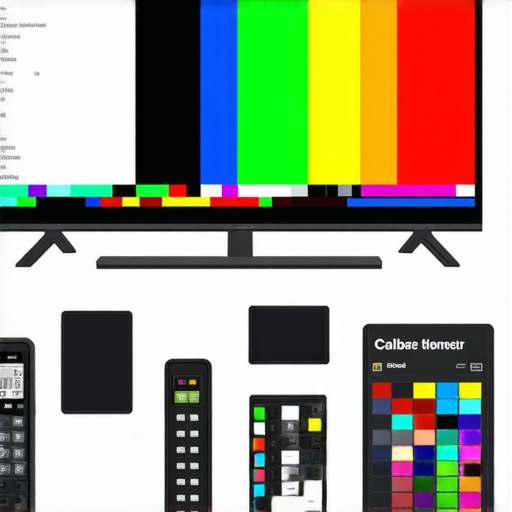 >
>
What I Wish I Knew Before Going All-In on OLED
One of the most profound lessons I learned was that technology isn’t static—what’s revolutionary today might be outdated tomorrow. Jumping into an OLED purchase without understanding upcoming innovations like PHOLED tech meant I missed out on better longevity and performance. Patience truly pays off, especially when industry insiders hint at breakthroughs in 2026 that could redefine home entertainment.
Another insight is the myth that brighter is always better. I believed that higher peak brightness equated to better HDR experience, but the reality is nuanced. OLED excels in perfect black levels and contrast, which are often more critical for cinematic quality than raw brightness. Recognizing this shifted my approach from chasing specs to seeking harmony between features and real-world picture quality.
Finally, I underestimated the importance of calibration. A well-calibrated OLED can outperform even the most expensive uncalibrated models, delivering stunning images and vibrant colors. Investing time and tools into calibration has transformed my viewing experience, ensuring each movie and game looks its best—regardless of the model I finally choose.
My Hidden Arsenal for Mastering OLED Performance
Trusted tools like the UltimateHomeDisplay guides have been instrumental in staying ahead of the curve. Devices such as the X-Rite i1Display Pro and calibration software like CalMAN have empowered me to fine-tune my display and maximize its potential. These resources are my go-to arsenal for ensuring my OLED remains a pinnacle of visual fidelity.
For content optimization, I leverage pattern generators and lighting control tools, which help simulate ideal viewing conditions and prevent issues like burn-in. Staying proactive with maintenance keeps the display performing at its peak for years to come, especially as new tech like self-calibrating panels emerges in 2026.
Sharing my journey, I encourage you to view your OLED acquisition as an ongoing process rather than a one-time purchase. Continuous calibration, content management, and following industry insights will make your investment truly worthwhile and future-proof your entertainment setup.
Seize Your Moment: Embrace the OLED Evolution
The horizon for OLED technology is brighter than ever, with imminent breakthroughs promising even more stunning visuals and durability. Don’t let hesitation hold you back from enjoying the best immersive experience possible. Whether you’re a serious gamer, cinephile, or casual viewer, the right OLED can transform your home into an entertainment paradise.
Take the leap with confidence—research upcoming models, set strategic savings, and prepare your space for the innovations coming in 2026. Your future self will thank you for making thoughtful decisions today, ensuring every viewing moment is as breathtaking as the industry promises.
What has held you back from upgrading your OLED setup? Share your experiences below—I’d love to hear your story and help you navigate this exciting journey!
Reading this post really resonated with me because I recently bought an OLED TV during a sale, only to notice some ghosting and burn-in issues after just a few months. It made me realize how important it is to understand the technology deeply before making such a significant investment. I appreciate the emphasis on calibration and maintenance—these are often overlooked aspects but crucial for long-term satisfaction. Regarding waiting for 2026 models, do you think the current premium for newer tech like PHOLED will justify delaying a purchase for average home use, or is it more beneficial for professional setups and enthusiasts? I’ve found that proper calibration tools and techniques can make a big difference in picture quality at any stage, but waiting for the latest innovations certainly seems like a smarter move if you’re aiming for perfection. Has anyone here managed to calibrate their OLED professionally for optimal results? Would love to hear some tips or experiences.